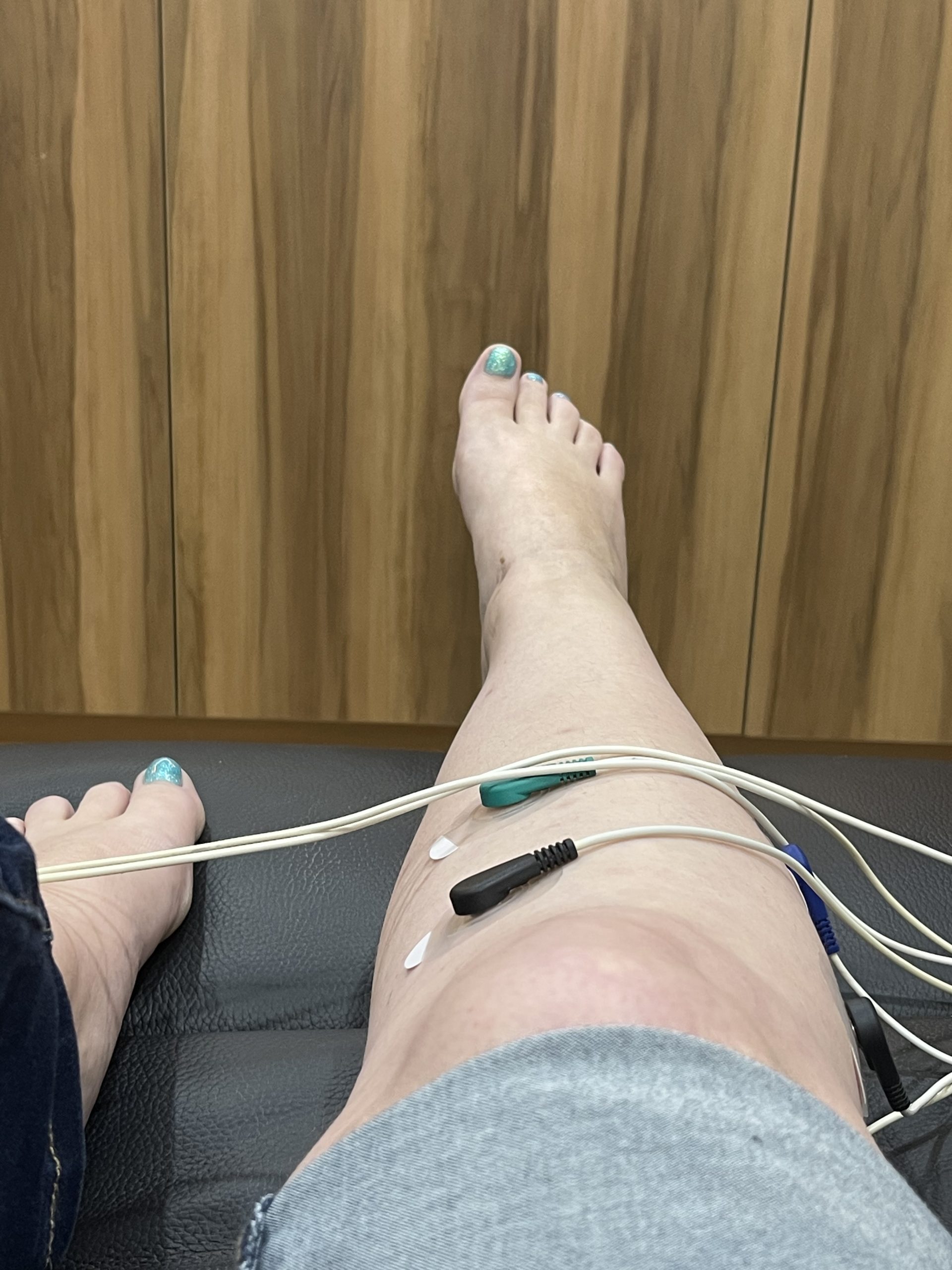
I’ve been having scrambler therapy for CRPS since 2022. It’s one of the more practical decisions I’ve made about pain, and also one of the more expensive, so I wrote down how it actually works in real life.
Scrambler therapy is also known by the machine name Calmare. This is my experience, not a recommendation, and I’m not a clinician.
What scrambler therapy for CRPS looks like for me
My treatment started with a two-week block, followed by booster sessions to top things up. That structure shapes everything else, because it isn’t a single appointment. It’s a commitment of time, travel and money.
I travel for treatment, which means accommodation in Noosa as well as the sessions themselves. A referral is needed. Funding is patchy, and the cost per session was significant when I wrote the original post. Prices change, so check the current figures with the clinic rather than relying on mine.
What the research says
The research on scrambler therapy is limited. I’d rather say that plainly than oversell it. Some people report benefit, and I’ve had treatment that I’m continuing with, but one person’s experience isn’t proof that it works for everyone.
Why I wrote it down
When I was working out whether to try it, I wanted the practical details more than the pitch. How long does it take? What does it cost once you add travel? Who do you need a referral from? The full post covers those questions in plain language, along with how I found my way to treatment.
If you’re thinking about it, talk to your treating team first. They know your history, and they can tell you whether it’s a reasonable option for you.
Where it sits for me
Scrambler therapy is one part of how I manage CRPS, alongside other things I’ve tried. It hasn’t made the condition go away, and I wouldn’t expect it to.
Read the full post on No Spoons to Cook (opens in a new tab)
If you’ve had scrambler therapy, what did you wish someone had told you beforehand?
More on living with CRPS: my CRPS and advocacy page.