Convenience ingredients aren’t a failure of cooking. For plenty of people, including me, they’re what makes cooking possible at all.
The point I make in the post is that convenience foods save more than time. Pre-chopped vegetables, microwave rice, roast chicken and sauces can take away peeling, standing, planning and washing up. Those are the real costs when you live with pain, fatigue, executive dysfunction or sensory overload.
Choose by your biggest barrier
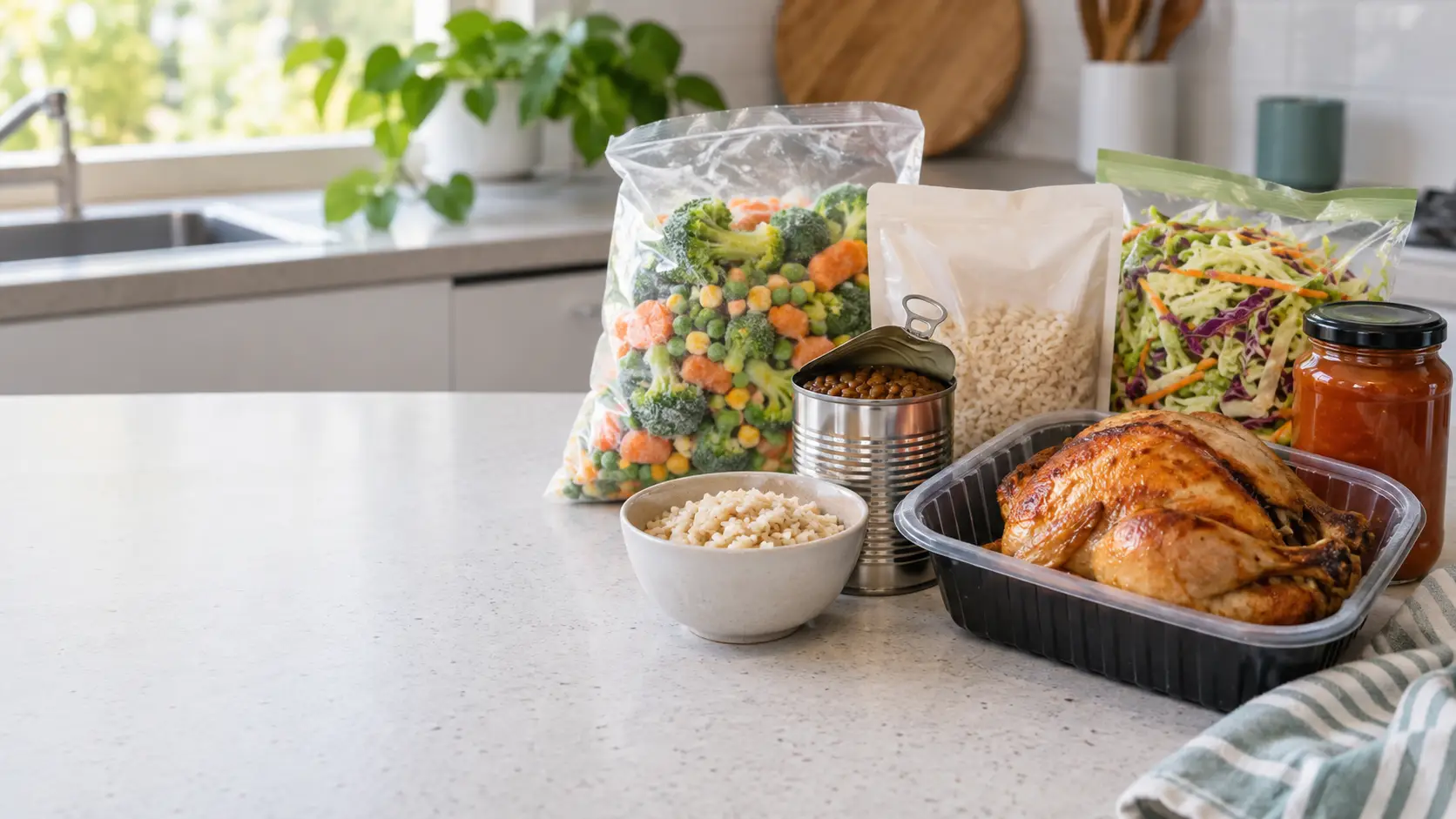
Grip, standing, energy or deciding: which one stops you? That’s the one to solve first. I use pre-cut produce to avoid cutting pumpkin when my leg hurts. Frozen diced onion, frozen vegetables, microwave rice, tinned legumes and roast chicken are the examples I come back to.
A formula for meals
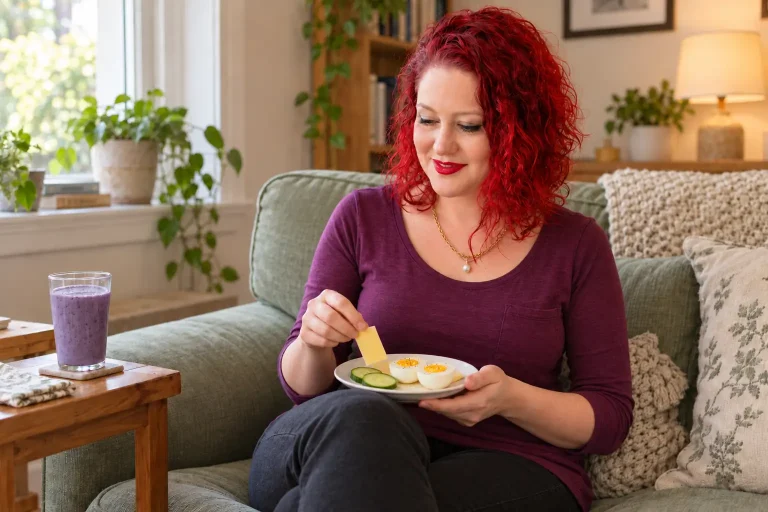
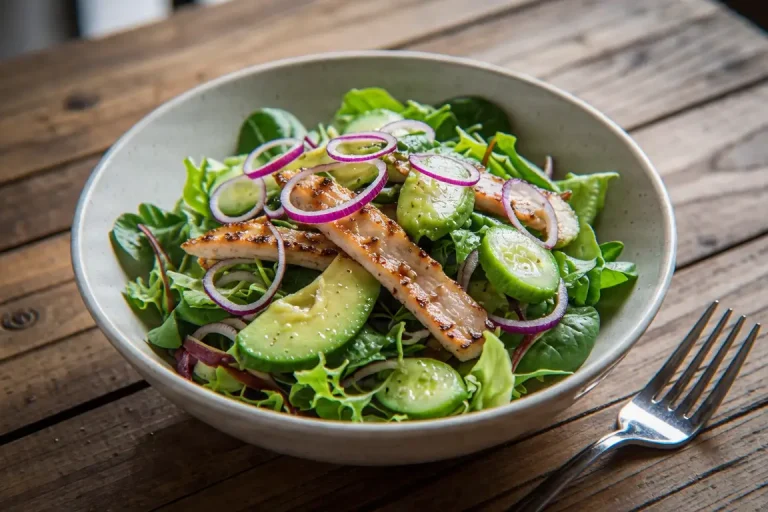
One protein, one carb, one fruit or vegetable, plus an optional flavour. That’s a meal. A snack-style dinner or a no-cook meal counts too.
Convenience ingredients and nutrition
The Australian Dietary Guidelines count frozen vegetables and lower-salt canned foods as nutritious options. The Baker Heart and Diabetes Institute suggests prepared salads, pre-chopped vegetables and frozen veg can help people eat more of them. Draining and rinsing tinned legumes reduces some of the sodium.
Food safety, budget and gear
Put leftover roast chicken in the fridge promptly, reheat until steaming, and don’t leave cooked rice out. For budgets, think about usable cost and waste, not just price per kilo. Online shopping helps, and so do kitchen scissors, electric can openers and lightweight bowls.
On flare days my appetite drops, and I rely on fluids with electrolytes, protein drinks and meal replacements. Every body has different barriers, and mine isn’t yours.
Read the full post on No Spoons to Cook (opens in a new tab)
Which convenience ingredient could you not cook without?
More on living with CRPS: my CRPS and advocacy page.