If you want to track progress without the scale, you’re not alone. The number on the scale is a weak measure of progress, and it can wreck your mood in about four seconds. Roughly the time it takes me to realise I haven’t had my coffee yet.
Why the scale lets you down
Body weight moves for many reasons that have nothing to do with the thing you’re trying to change. The research on regular self-weighing is mixed, and for some people it does more harm than good. If seeing the number drives your decisions, it might be worth putting it away.
How to track progress without the scale
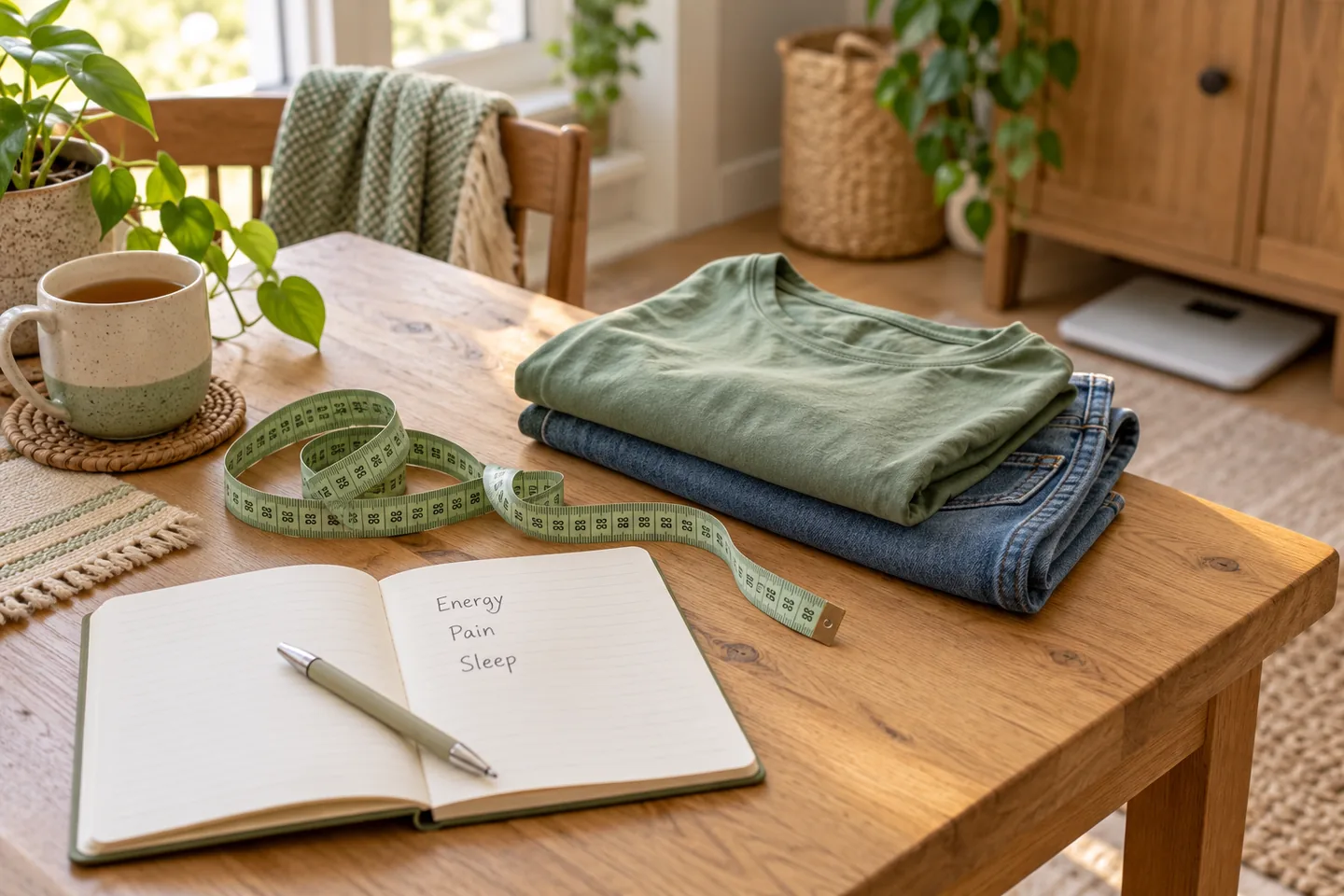
I suggest measuring things that actually reflect how you’re doing, ideally monthly:
- Waist measurement.
- How your clothes fit.
- Function: what you can do, and how easily.
- Energy, pain and sleep.
Monthly is deliberate. Day-to-day changes are noise, and checking too often turns tracking into another chore.
Function counts as progress. Walking further, standing longer or getting through a task that used to cost too many spoons all count. If you do take measurements, be consistent: the same tape, the same spot and the same time of day make the numbers more useful. Decide in advance what you’ll do with them, because tracking with no purpose is just admin.
An app I looked at
The post features MeThreeSixty, an app for tracking measurements. I cover its accuracy and privacy limits, so read that before you hand over any data. As always, think about who has access to your information.
A caution
Tracking isn’t right for everyone. If measuring, weighing or monitoring your body worsens your relationship with food or exercise, stop and talk to a professional. The Butterfly Foundation’s national helpline is 1800 33 4673.
This is lived experience, not medical advice.
Read the full post on No Spoons to Cook (opens in a new tab)
What’s one non-scale win you’d like to notice more?
Full recipes and food guides live on No Spoons to Cook, the food site Kerry Kinross and I run.